October 15, 2026
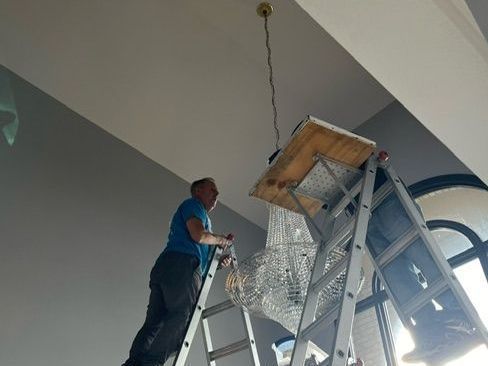
Renovating your home often means moving furniture, protecting flooring, and preparing rooms for construction. But what about the chandelier hanging above your dining table, staircase, or entryway? Chandeliers can be particularly vulnerable during remodeling projects. Dust from drywall work, paint splatter, vibrations, and accidental contact with tools or equipment can damage delicate crystals, decorative finishes, and other components. The safest approach is generally to have your chandelier professionally removed and stored before major renovation work begins. If removal isn't practical, protect the fixture properly and safely disconnect its electrical supply before covering it. Whether you're remodeling one room or updating your entire home, planning can help protect your chandelier and make reinstallation easier once the work is complete. Should You Remove Your Chandelier Before Renovating? In many situations, removing your chandelier before construction begins is the most practical way to protect it. This is especially important if your renovation involves ceiling repairs, drywall installation, painting, demolition, or other work that creates dust and debris. Even when contractors aren't working directly around your chandelier, airborne dust can settle into its smaller components. Depending on the fixture's materials and finish, removing construction residue afterward may require specialized cleaning. Consider professional removal when: Your renovation involves ceiling or electrical work. Contractors will be painting, sanding, or installing drywall nearby. Your chandelier has delicate crystals, glass components, or decorative finishes. The fixture hangs in an area where workers will use ladders or construction equipment. You plan to relocate the chandelier or change its hanging height. For large, antique, or intricate fixtures, professional removal can also reduce the risk of damage during disassembly. Executive Chandelier Services offers chandelier moving and shipping , including disassembly, packing, transportation, and reinstallation. How to Protect a Chandelier During a Renovation Sometimes, you can't remove a chandelier right away. In these cases, coordinate protection with your contractor and a qualified electrician before construction begins. Turn Off the Power Before Any Protective Covering Never cover an energized chandelier. A light fixture that is accidentally switched on beneath plastic, fabric, or another covering can create a serious fire hazard. Before anyone covers or works on the fixture, a qualified professional should disconnect its electrical supply, verify the power is off, and safely handle exposed wiring. Simply turning off a wall switch is not a substitute for proper electrical isolation. Protective materials must also be appropriate for the fixture and installation conditions. Avoid tightly wrapping delicate crystals or applying adhesive directly to decorative finishes. For additional guidance, read Executive Chandelier's article on protecting your chandelier during a remodel . Keep the Chandelier Away From Construction Activity If the chandelier must remain in place, discuss its location with your renovation contractor. Workers should know the fixture is fragile and that ladders, tools, and building materials should not contact it. Also, understand that covering a chandelier does not eliminate every risk. Accidental impacts and vibrations can still affect certain fixtures, particularly those with older or delicate components. If the renovation involves work directly above or around the chandelier, removal may be a better option. Where Should You Store a Chandelier During Remodeling? If you decide to remove your chandelier, choose a suitable storage location to protect it. Ideally, store the chandelier in a clean, dry, secure location away from construction activity, excessive moisture, and temperature fluctuations. How it is packed matters as much as where it is stored. Crystal chandeliers often contain numerous removable pieces. Without careful labeling and organization, reassembling the fixture later can become difficult. Before storage, a chandelier professional may recommend documenting the fixture's original arrangement, removing certain fragile components, and packing them individually. Keep these considerations in mind: Use protective materials appropriate for the chandelier's crystals, frame, and finish. Keep removable pieces organized and clearly labeled. Avoid stacking heavy objects on chandelier components. Store the fixture where it is unlikely to be moved or disturbed. Keep photographs and relevant installation information available for reassembly. Depending on the chandelier's size and construction, specialized packing or crating may be appropriate. Executive Chandelier Services offers professional disassembly and secure packing through its chandelier moving and shipping services . Homeowners can discuss their project's specific handling and transportation needs before renovation work begins. Plan for Cleaning, Repairs, and Reinstallation A home renovation can be a convenient time to evaluate your chandelier's condition before reinstalling it. Instead of waiting until the fixture is reinstalled, consider whether it needs cleaning, replacement components, or other maintenance. Clean the Chandelier Before Reinstallation Even carefully stored chandeliers may benefit from cleaning before being rehung. This is especially useful for fixtures that have accumulated dust over time or have decorative pieces that are hard to reach once installed. However, different chandelier materials require different cleaning methods. Do not expose certain finishes, electrical components, or delicate decorative elements to moisture or general-purpose cleaning products. Executive Chandelier provides professional chandelier cleaning services. For additional information, read its guide to the dos and don'ts of chandelier cleaning . Inspect for Damage or Wear Before reinstalling your chandelier, have its condition evaluated, especially if it is older or has been moved during construction. Look for missing crystals, damaged decorative components, loose connections, or visible deterioration. For chandeliers that need more extensive attention, Executive Chandelier offers restoration services , including crystal and component replacement, frame refinishing, rewiring, and structural restoration. Addressing these issues while the chandelier is removed may help simplify the overall renovation schedule. Reinstall the Chandelier After Construction Is Complete The best time to reinstall a chandelier is generally after ceiling work, painting, sanding, and major dust-producing tasks are finished. Before reinstalling, clean the area, evaluate the ceiling support and electrical setup, and consider any changes to the room's layout. For example, a dining room renovation might involve relocating the table or adjusting ceiling heights. These changes can affect where the chandelier should hang and how much clearance it needs. If your renovation includes a new fixture location, coordinate the electrical and structural requirements with qualified professionals. Professional installation is particularly important for heavy, complex, or high-ceiling chandeliers that require specialized handling. When to Call a Professional Chandelier Service Not every chandelier presents the same challenges. A relatively simple fixture may require less preparation than an antique crystal chandelier with numerous hanging components. However, consider professional help if a chandelier is especially large, heavy, fragile, hard to reach, or valuable. A chandelier specialist can help evaluate the fixture's handling needs and coordinate services such as removal, cleaning, packing, restoration, and reinstallation. Make these arrangements before the renovation begins, rather than waiting until contractors are ready to work around the fixture. Executive Chandelier Services works with homeowners throughout the Greater Pittsburgh area, providing chandelier cleaning, restoration, installation, and moving services. Frequently Asked Questions About Chandeliers During Renovations Can I leave my chandelier hanging during a home renovation? Possibly, depending on the renovation type and the chandelier's location. However, removal is generally preferable when construction involves significant dust, ceiling work, or activity close to the fixture. If you leave it installed, have a qualified professional address electrical safety and appropriate protection. Can I cover my chandelier with plastic during remodeling? Never cover a chandelier while it's energized. Plastic and other coverings can create fire hazards if someone accidentally turns the fixture on. Before covering it, have a qualified professional safely disconnect the electrical supply and assess the best protection method. Should I clean my chandelier before or after renovating? If you remove the chandelier, cleaning before storage or reinstallation may be convenient. If it remains in the construction area, wait until major dust-producing work is complete before arranging a final cleaning. The appropriate timing depends on the fixture and renovation schedule. When should I reinstall my chandelier after a renovation? Reinstall the chandelier after ceiling repairs, painting, sanding, and major construction cleanup are finished. Have the mounting support and electrical connections checked before installation, particularly if the room's layout or ceiling has changed. Prepare Your Chandelier for Your Home Renovation Your chandelier deserves a place in your renovation plans, not just in your finished room. Deciding early about removal, protection, storage, and reinstallation can reduce damage risk and avoid unnecessary complications during construction. Whether you're updating a dining room, remodeling an entryway, or renovating your entire home, Executive Chandelier Services can provide the specialized care your fixture may need. Planning a renovation in the Greater Pittsburgh area? Explore Executive Chandelier's professional services or call 412-487-9219 to discuss chandelier removal, cleaning, restoration, or reinstallation for your upcoming project